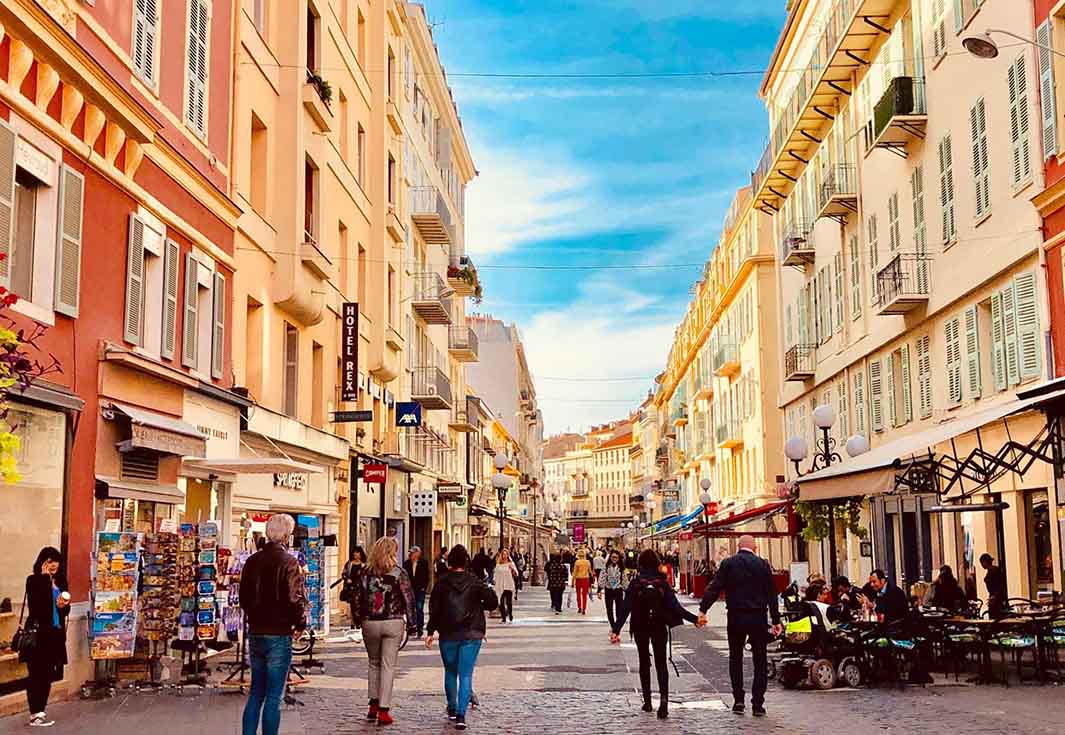
The sun rises early in Nice, spilling golden light over terracotta rooftops and casting a warm sheen on the pastel facades of Old Town. By 7:30 a.m., the sea breeze has already slipped into the winding alleys, teasing the crisp awnings of boutiques that promise an enticing mix of Provençal charm and Côte d’Azur sophistication.
Shopping here is not merely transactional—it’s experiential. Every street corner, every boutique window, every marché seems to hum with the energy of a city that has long mastered the art of refinement. The goal was not to rush through a checklist of shops but to walk, pause, absorb, and, only when the timing felt just right, indulge.
1. The Golden Triangle of Carré d’Or: Where Elegance Reigns
Nestled between Boulevard Victor Hugo, Rue Alphonse Karr, and Avenue de Verdun lies Carré d’Or, Nice’s version of a fashion sanctuary. Here, the atmosphere is distinctly Parisian, but with a Riviera edge—effortless luxury under a Mediterranean sun.
Rue Paradis is the artery of this district. Dior, Chanel, Louis Vuitton—all the usual couture suspects line the polished street, and the staff greet you with a nod that’s equal parts discretion and cordiality. Dior’s boutique was a highlight, not just for its summer collection displayed with the precision of a museum installation, but for the manner in which the space whispered rather than shouted elegance.
At Galeries Lafayette Nice Massena, the layout sprawls elegantly across several floors. While some visitors rush to the haute couture labels on the ground floor, it’s the French and European mid-tier brands—Sandro, Maje, Claudie Pierlot—that truly reflect the French art of dressing well without excess. A pair of caramel leather ankle boots from Maje, crafted in Portugal and delicately stitched, seemed to carry the essence of Riviera autumns.
On Avenue Jean Médecin, just a short walk away, you’ll find more accessible options. Sephora here is not the chaotic echo chamber it can become elsewhere. It’s organized, well-stocked, and even hosts niche French beauty brands not found outside of Europe. A quick detour into Zara Home, tucked beside FNAC, felt surprisingly rewarding—its collection of linen napkins and ceramic pitchers almost made one believe they were on the brink of becoming a Provençal host.
2. Vieux Nice: The Art of Wandering and Discovering
If Carré d’Or is the structured overture, Old Nice is the jazz improvisation. The quartier breathes history—its labyrinth of ochre and burnt sienna buildings reverberates with every footstep on cobblestone.
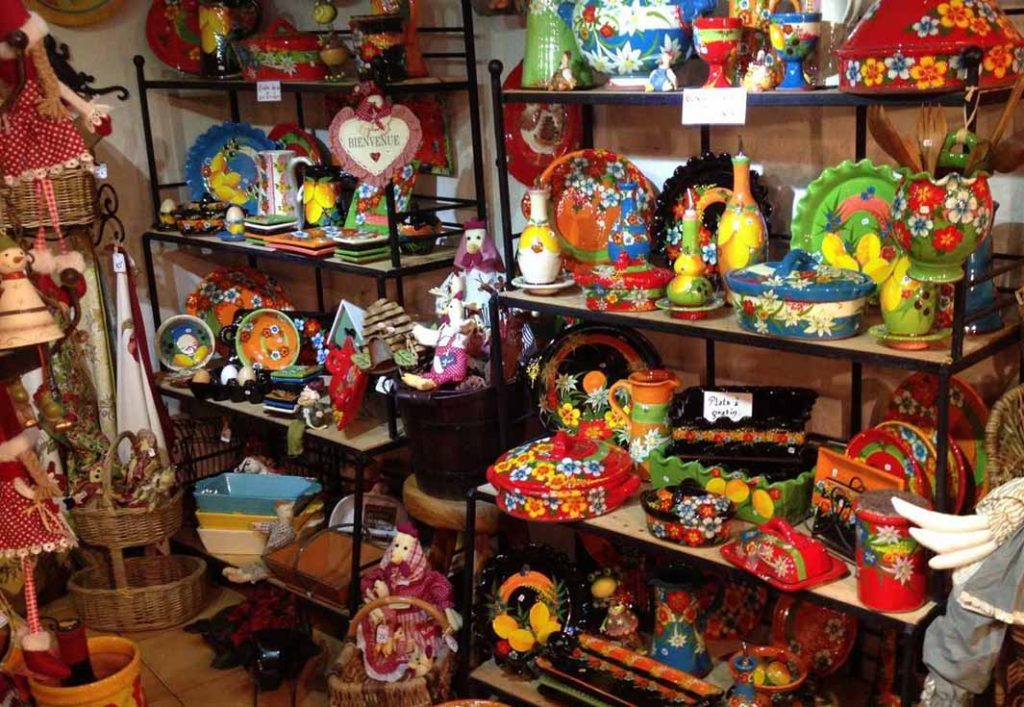
On Rue Droite, I walked into Atelier des Cigales, a small ceramic workshop whose pieces—bowls shaped like olive leaves, pitchers hand-painted with lavender sprigs—carry the soul of Southern France. The artist herself was present, her hands still stained with cobalt and ochre glazes, and her explanations of her process had none of the rehearsed patter one sometimes finds in tourist-frequented shops.
Just down the way, a perfumery beckoned—Molinard, the Grasse-based house with a boutique carved into the side of a 17th-century building. The perfume associate, a woman with silver hair and the poise of an opera singer, guided me through the process of customizing a fragrance. My resulting blend: notes of fig, neroli, and cedar. Bottled, labeled, and signed with a flourish. A souvenir with scent memory.
Over on Cours Saleya, between flower stalls and spice merchants, a treasure trove of local artisans awaits. A stall of vintage books and maps offered a 1911 reproduction of a Baedeker guide to the French Riviera. Its pages, brittle and sun-kissed, felt like holding a sliver of time. Another vendor sold soaps infused with olive oil and sea salt, wrapped in coarse linen tied with raffia string. They now perfume the bathroom back home like a Provençal breeze.
3. Avenue Jean Médecin: Department Stores, Streetwear, and Surprises
Running from Place Masséna to the train station, Avenue Jean Médecin might seem at first like any other commercial boulevard. H&M, Zara, Bershka—but beneath this high-street veneer lies a rhythm uniquely Niçoise.
Nice Étoile, the central mall, is not just a refuge for air conditioning. On the top floor, a home design store called Habitat caught my eye. Scandinavian in layout but French in flair, it offered minimalist teapots and cutlery that made one long to host slow breakfasts and late-night conversations.
What struck me was the mixing—international chains next to French originals. At Kookaï, a label that has all but disappeared elsewhere, I found a raspberry-colored blouse with pleats so delicate they could only have been sewn by patient hands. Even Monoprix, a seemingly basic grocery-and-clothing hybrid, had me lingering—there’s something undeniably chic about buying a bottle of rosé, a cotton blouse, and a pair of leather sandals under one roof.
4. Artisan Corners and Concept Stores: Beyond the Mainstream
The most rewarding finds are often off-map. Walking down Rue Bonaparte, in the heart of Le Port district, I encountered À Côté, a concept store that merges fashion, homeware, and fragrance into an experience best enjoyed slowly. The owner curated everything—from the Italian linen trousers to the Japanese incense—with a consistency of tone. Nothing felt accidental.
On the same street, Les Petits Papiers offered an entirely different seduction: stationery. Embossed notecards, letterpressed with motifs of lemons and olives; notebooks hand-bound with marbled covers; even fountain pens made in small French ateliers. Writing a letter suddenly seemed like a radical act of romance.
5. Marchés and Flea Finds: The Joy of the Unexpected
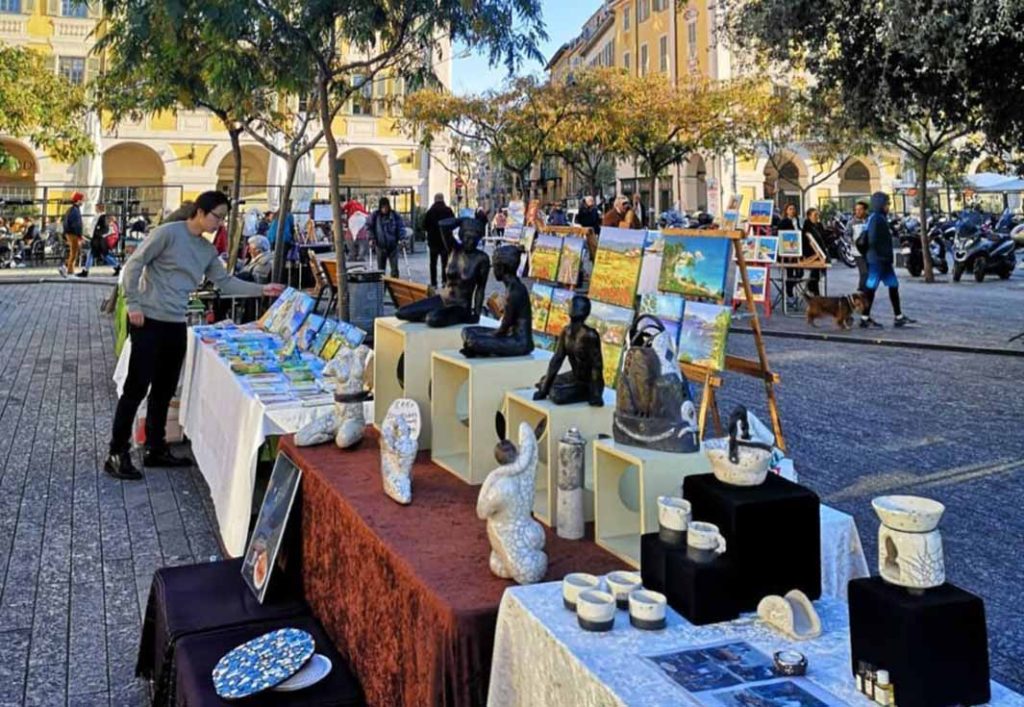
The Brocante at Place Garibaldi, held monthly, unfurled like a living museum. Beneath cream-colored umbrellas, dealers presented silver candelabras, vintage postcards, Art Deco clocks, and turn-of-the-century opera glasses. I left with a 1950s linen tea towel printed with a map of the Côte d’Azur—proof that not all souvenirs need to sparkle.
At the Libération Market, away from the tourists, I found myself in conversation with a vendor selling baskets. Not just any baskets, but hand-woven pieces made in the Var region from olive branches and reed. Their shape recalled the ones I’d seen in old Provençal kitchens. I bought one to carry fruit, and another I simply couldn’t leave behind—it felt like a good luck charm.
6. Local Brands That Speak Riviera
There’s a certain pride in buying local—brands rooted in the soil and salt of the region. Façonnable, born in Nice in 1950, continues to define Riviera menswear with its crisp tailoring and maritime palette. Their flagship store, not far from the Promenade des Anglais, exudes a kind of nautical gentlemanliness rarely seen today.
Then there’s Fragonard, the venerable perfume house. Its boutique, though smaller than its Grasse counterpart, carries seasonal editions unavailable elsewhere. I picked up a solid perfume in a tin, scented with mimosa and citrus—a scent that will likely outlive the summer in memory.
7. Shopping as Dialogue: The Human Element
What stood out in Nice wasn’t just the merchandise—it was the moments of conversation. The shoemaker who explained the difference between Italian and Spanish leathers with reverence. The bookshop owner who insisted I read a certain novel because “it smells like the sea.” The tailor who took one look at my shoulder line and began pinning a jacket like a sculptor.
Shopping here felt less like acquisition and more like a dialogue—a way to understand a culture through the objects it deems beautiful, useful, or enduring.
8. A Final Turn on the Promenade
The last walk down the Promenade des Anglais, my bags trailing like loyal companions, carried with it a quiet contentment. Not because of what had been bought, but because of how each object now carried a story.
Nice is more than its glitz, more than its beaches and baroque architecture. It is a city that invites you to look, linger, and sometimes, when the timing is right, take something with you. Something that will still smell faintly of citrus and salt, long after the suitcase is unpacked.