1. Arrival in Nice: A Quiet Pulse Beneath the Riviera Sun
Nice in the early morning carries a hush I hadn’t expected. The golden warmth of the Côte d’Azur sunlight doesn’t roar; it murmurs against the old ochre walls of the buildings in Vieux Nice. The Mediterranean light—this legendary element that drew painters for over a century—spills generously but without excess. It’s no wonder Matisse stayed. It’s no mystery why Chagall built here.
I landed with a suitcase too full of linen shirts and an itinerary too ambitious. But within hours, that pace softened. Nice has its own rhythm, dictated by the sea’s breath and the worn stones of its hills. What I came seeking wasn’t just the Riviera—the yacht-decked glamour or cliff-perched villas—but a quieter pursuit: a direct conversation with the works of two giants who made this city their own in very different ways.
2. Cimiez: Olive Trees and the Air Matisse Breathed
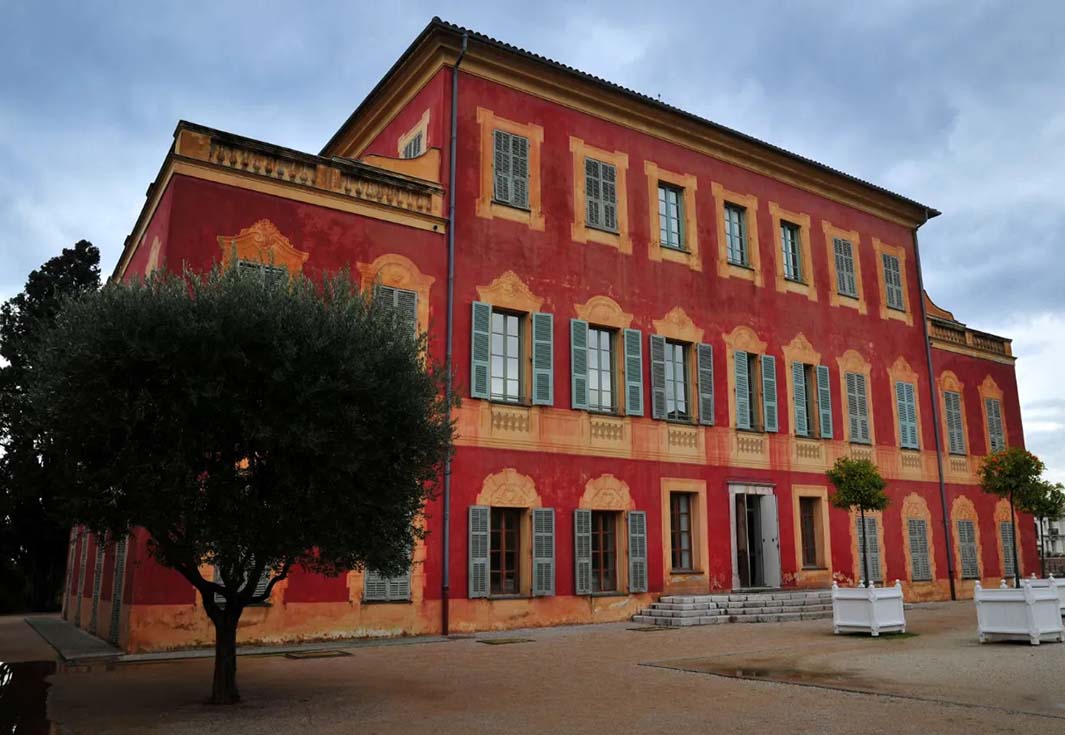
Getting to the Musée Matisse requires a climb, literal and otherwise. It’s perched on Cimiez Hill, above the buzz of the city. The neighborhood, elegant and quiet, is home to Roman ruins and calm gardens where elderly Niçois play boules. The air smells faintly of cypress and hot stone. Everything here feels aged with grace.
The museum itself—a 17th-century Genoese villa painted a deep red—sits confidently among olive trees. I stood for a while before going in, looking at the light falling through the leaves, wondering if it was this very tree-filtered sunlight that pushed Matisse toward his late cut-outs.
Inside, the journey begins modestly. The curation is intelligent, sensitive to space. Rather than overwhelming you with masterpieces in the way Paris or New York might, the museum invites you into a room-by-room conversation. Here is a sketch Matisse made in a hospital bed; there is a ceramic plate he designed. It’s intimate. The walls are not overburdened.
One room houses his early Nice-period paintings, women in interiors, rendered with ornamental serenity. He came to Nice to recover from bronchitis, but what he found here, he once said, was a new dimension of light. And that light never left his work.
In a hallway, I paused before one of his lesser-discussed still lifes. It was so simple: a blue vase, an orange. But the hue of the wall behind it—an impossible pink—seemed to whisper in a language I was only beginning to understand. Color was no longer descriptive; it was declarative.
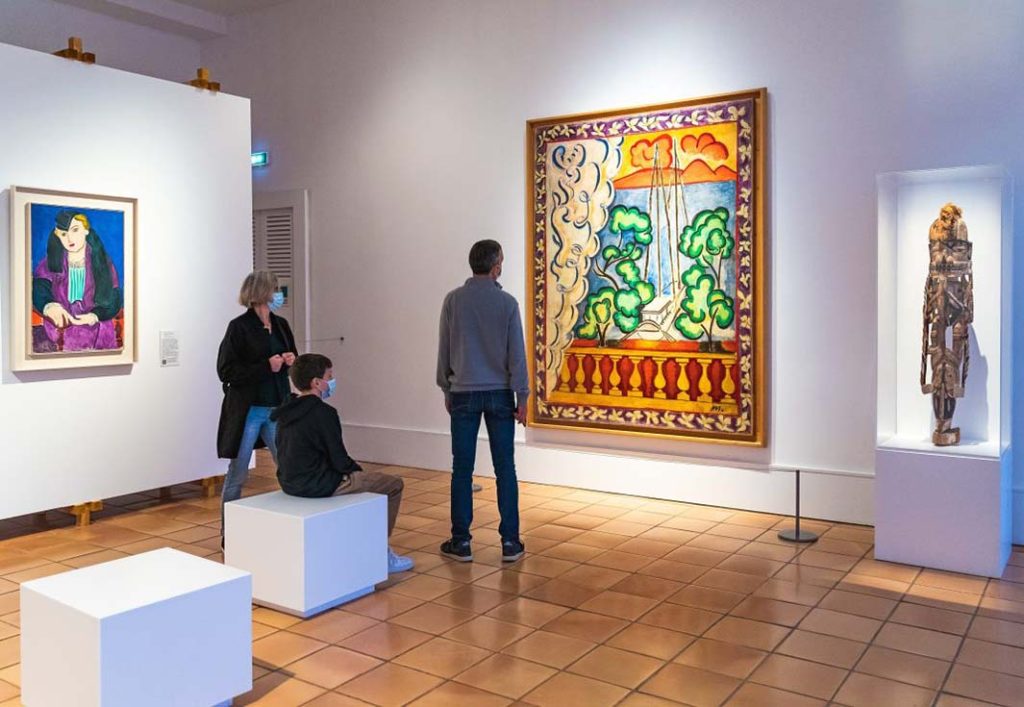
3. Between Paper and Sky: The Cut-Outs
The final galleries of the museum lead toward the cut-outs, those monumental compositions made when Matisse could no longer paint due to illness. Paper became his pigment, scissors his brush. “Drawing with scissors,” he called it.
To see these pieces in person—especially “Fleurs et fruits” or “La Tristesse du Roi”—is to be struck by their physicality. These are not digital reproductions. The layers are thick; the color fields vast and unapologetic. They feel alive. One massive blue figure looms like a guardian spirit across a wall. I stepped closer, just to be sure I wasn’t imagining its breathing.
There was no silence in the room, but there was stillness. A kind of visual hush. Children sat cross-legged beneath the art, sketching on museum-provided pads. A docent explained the works in French to a group of tourists. Her voice was soft, reverent. Everyone understood that something holy had happened here—not sacred in the religious sense, but in the sense of deep human expression. A man’s life, distilled into color.
4. A Walk Between Two Visions: On Foot to Chagall
The Musée Marc Chagall is a different walk, a different tone. It lies not far—roughly a half-hour by foot from the Matisse Museum—but the city shifts beneath your feet as you go. From olive trees and Roman ghosts to narrow modern streets, shops, and the scent of espresso and laundry. Nice is a palimpsest, a city of eras living atop one another.
The museum is set in a quiet garden, unassuming at first glance. Unlike Matisse’s baroque villa, the Chagall Museum was built with his input and collaboration. It is a space designed not just to hold his work but to house his spirit. Here, Chagall’s Biblical Message series finds its permanent home—a series of 17 large paintings that interpret the Old Testament with riotous color and soaring imagination.
I entered just as sunlight filtered through a stained-glass window. It wasn’t just color that greeted me, but a sense of elevation. These works don’t sit passively on the walls. They float. They climb. They seem to ascend.
5. Chagall’s Universe: Prophets in Sapphire and Gold
What struck me immediately was the tonal contrast to Matisse. Where Matisse’s color speaks in declarative calm, Chagall’s colors sing. Or sometimes they wail. His blue is not the sea’s blue; it’s the dream’s blue, the sky you see in sleep. His yellows are sunlit yet sorrowful. The reds bleed meaning.
In the “Creation of Man,” Adam and Eve float in a paradise that seems more like memory than myth. Chagall’s figures defy gravity, often painted upside down, or suspended mid-embrace. There is pain here, and ecstasy. It’s not just religion on display—it’s the spiritual imagination of a man who survived pogroms, exile, and war. These are not easy paintings, but they are profoundly generous.
One room is given to the Song of Songs, those tender, erotic, divine verses. Chagall rendered them with surprising gentleness: lovers encircled by flowers, faces pressed together in eternal closeness. The museum encourages quiet here. I sat on a bench for nearly an hour, letting the colors do their work. Around me, visitors spoke in whispers, or not at all.
6. A Dialogue Without Words
Leaving the museum, I felt as if I had eavesdropped on a conversation not meant for ears. Matisse speaks in form and restraint; Chagall sings in myth and vision. They never met, and yet in Nice, their voices echo off each other. Two men who approached life and art so differently—one through the serenity of order, the other through the chaos of dream—and both found in this Mediterranean city a place to work, to believe, and to build.
Their museums are not just about paintings. They are spaces of presence. You don’t just look—you enter. And when you leave, you are not quite who you were.
7. The Light That Made Everything Possible
Back outside, Nice continued in its slow rhythm. The sun now sat lower, casting soft gold across the façades of apartment buildings. I walked without direction, carried by the energy that lingers after time spent near powerful art. Both Matisse and Chagall spoke often of light. Matisse called it the “luminous serenity” of Nice. Chagall once said the sky over the city “opened” for him.
That light isn’t only visual. It’s psychological. Nice gives space to the inward gaze. Along the Promenade du Paillon, children played near fountains while older couples sat quietly on benches. I wandered through the Jardin Albert I, watching as shade moved like slow water beneath the palms.
At Place Masséna, I stopped for a coffee at a small corner café. The waiter wore a pressed white shirt and moved as if time had slowed for him. The espresso arrived with a single sugar cube, no more, no less. Everything was understated. Precision without arrogance. As I sipped, the sky flared coral over the rooftops, and I caught myself thinking that Chagall’s “Creation” might have borrowed this very hue.
8. On the Edge of Color: Night in Old Nice
That evening, I walked through the narrow alleys of the old town. Vieux Nice is a place of textures. Stone steps worn concave by centuries of feet. Shutters faded by salt. Stray notes of accordion music floating through open windows. I passed shops selling soaps, spices, linen dresses stitched with lemons, galleries hung with contemporary abstract works that bore faint echoes of Matisse’s palettes or Chagall’s shapes, as if their influence lingered in the very pigments of the city.
Dinner was taken without haste. A small bistro offered daube niçoise, a local beef stew rich with red wine and herbs. I lingered over every bite, the way one might linger over brushstrokes. Here, meals are not interruptions to art—they are part of the same conversation. The table, like the canvas, is a stage for color, texture, and memory.
As the meal ended, I took a slow walk back toward the sea. The Promenade des Anglais glittered, each streetlamp casting a circle of gold on the pavement. The sea beyond was ink-black, endless. I stopped by the balustrade, rested my arms on the cool stone, and simply listened. No waves tonight—just a faint hush, the same silence I’d felt in the museum rooms. It stayed with me.
9. Morning Rituals and Layers of Meaning
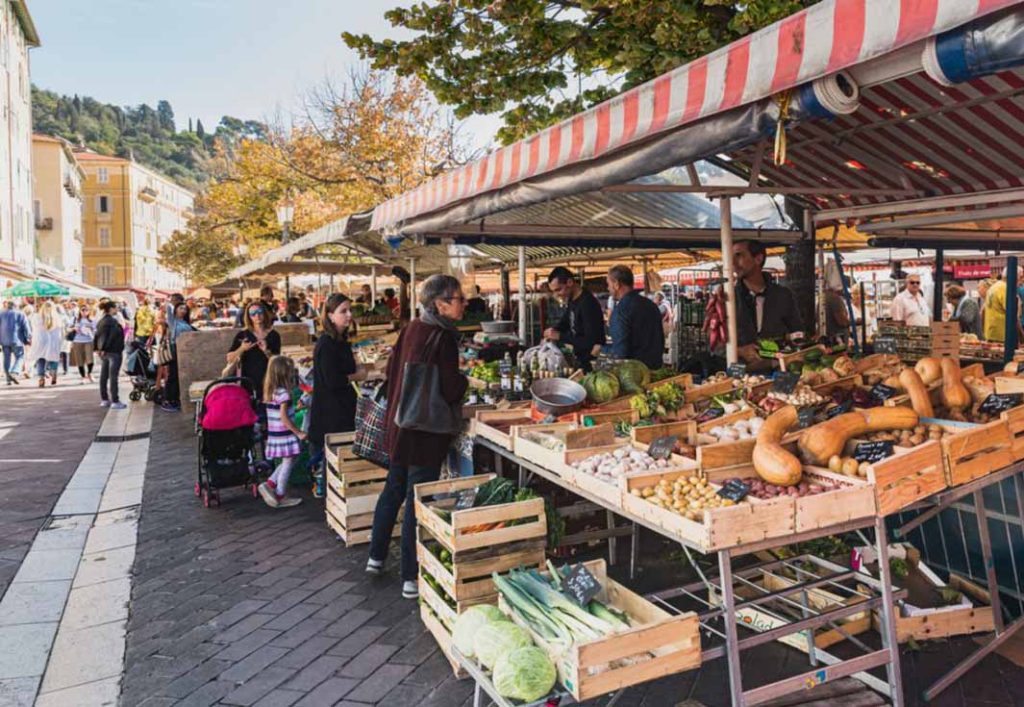
The next day began as most days in Nice ought to: at the market in Cours Saleya. Apricots blushed in wooden crates. Peonies unfolded like quiet explosions. A man sold olives in fifteen varieties, each glistening under the sun. I bought a small box of figs and ate them beneath an awning, their sweetness sudden and unapologetic. Every flavor here feels like a memory stirred.
Walking again through Cimiez that afternoon, I passed the Franciscan monastery garden not far from the Matisse Museum. Few tourists make it up here, but those who do find silence and panoramic views over the city. The cemetery nearby is where Matisse is buried. His grave is simple. It doesn’t shout. But it’s ringed with flowers, and the breeze that moves through the cypress trees feels like something more than wind.
Chagall’s grave lies further away, in Saint-Paul-de-Vence, a place I hoped to reach next. But here in Nice, the two artists have already spoken enough. Their dialogue continues in the minds of those who walk between their museums.
10. Of Frames and Windows
A painting is a window. That’s what struck me most during these visits. Both Matisse and Chagall used windows often in their work. Matisse painted open shutters, curtains drawn back, looking onto gardens or sea. Chagall’s windows are more metaphorical—portals into dream or memory. But the principle holds: art allows a view outward or inward, depending on how you look.
In the museums, these frames multiplied. A window within a painting, within a frame, on a wall, in a museum that itself is a window into another life. And around it all, the light of Nice, filtering through trees, bouncing off stone. There is no escaping it. And no reason to try.
11. An Afternoon with the Sea
On my final afternoon in Nice, I returned to the beach. Not the polished private sections with striped umbrellas, but the public pebbled shore just west of the old port. Locals sunbathed without ceremony. Teenagers dove from the rocks. The sea was the same blue I had seen in Chagall’s canvases, only real. And yet it still looked painted.
I sat for an hour or more, letting the waves speak in their unchanging dialect. Time stretched. A group of friends nearby sang softly in French. Someone read aloud from a book. The Mediterranean, unchanged for centuries, touched the same stones that Matisse and Chagall must have known. The same salt breeze. The same light.
12. Leaving without Departing
On my last evening, I didn’t rush to take photos. I didn’t record. I simply walked. Along Rue Catherine Ségurane, then back to Place Garibaldi. I sat under the yellow arcades, ordered a pastis, and watched the light fold itself slowly into dusk.
There’s a rhythm to this city that refuses to be rushed. It taught me something I didn’t know I needed: that presence is a kind of art, too. That to walk without urgency, to see without judgment, to feel color rather than name it—these are skills worth cultivating.
The voices of Matisse and Chagall still echoed in my mind. Not as teachers, not as masters, but as companions. Not everything needs to be understood. Some things are meant to be absorbed, like warmth through the skin.
Nice doesn’t change you in dramatic strokes. It works like watercolor—layer upon layer, seeping slowly in, until one day you realize you see the world slightly differently. Light falls in new ways. Colors hum a little louder.